Chemal and the Blue Lakes
Territories with a unique aura are generously scattered throughout the Altai Mountains, but there are areas where the concentration of the Force Places is simply unbelievable. And Chemal is a great example of this.
A large village lies on the bank of the Katun at the very beginning of its lower flow. Chemal epigenetic valley: so scientists call this area. Amazing, unique, formed outside of the connection with geological laws, as if the geographic structure imposed on the earth's surface. The focus of times and forces: the oldest Altai beliefs, Orthodox shrines, natural energy, cosmic energies. Pole of attraction for people seeking harmony in the world around them and in their own soul.
Natural resort
Since the middle of the XIX century Chemal is known as a resort area. Here come whole families from all over the world; vacationers breathe the mountain air, drink koumiss, walk around the most beautiful surroundings. In Soviet times, the country's first tuberculosis sanatorium was established here.
Chemal refers to low-mountain resorts, the main cure is the climate: plenty of sun, mild winter, moderately hot summer. Relative air humidity in this region is the same as in Yalta or Anapa, and there are even more sunny days than in the Crimea. And how fragrant and pure the healing air of a pine forest! Today the neighborhood of the village has the official status of Chemal health-improving area.
The name "Chemal" is interpreted in different ways; the most common variant of the translation is the "anthill". When centuries ago in the wide open area where the village is today, from the tops of the surrounding mountains grazing herds of livestock seemed to be a scattering of moving points, like ants near their forest house.
Thrice sacred island
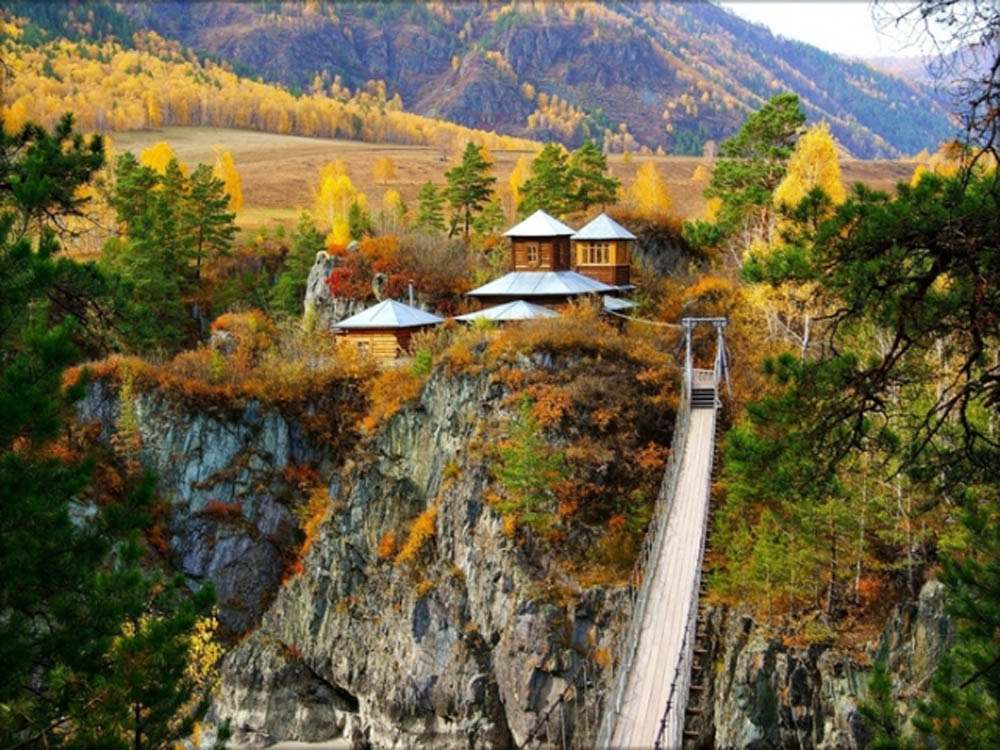
In the channel of Katun, near Chemal, separating from the main stream a backwater, stands a rock of outstanding beauty, overgrown with pines. This is the island Patmos, Altai "namesake" of the famous Greek Patmos. On it, a small church, gilded with selective logs wood, miraculously placed on the rocky top - the temple of John the Theologian, probably the most unusual and famous in the Altai; on the island leads a narrow suspension bridge. On the contrary, on the autochthonous shore, the female St. John the Theologian monastery of the Barnaul Znamensky Monastery was built.
The temple has an interesting fate, like the island itself, not accidentally named the biblical name. In 1855, the island rock on Katun, as a good place for prayers and meditations, was consecrated by Bishop Parfenius. Exactly 60 years later, on August 9, 1915, the Bishop of Biysk Innokentii consecrated the St. John the Theological temple, which was moved here from the shore. Burnt in the years of Soviet power, the temple was recreated in its original form and re-consecrated in 2001. Now thrice sanctified Patmos-on-Katun attracts pilgrims from all over Russia.
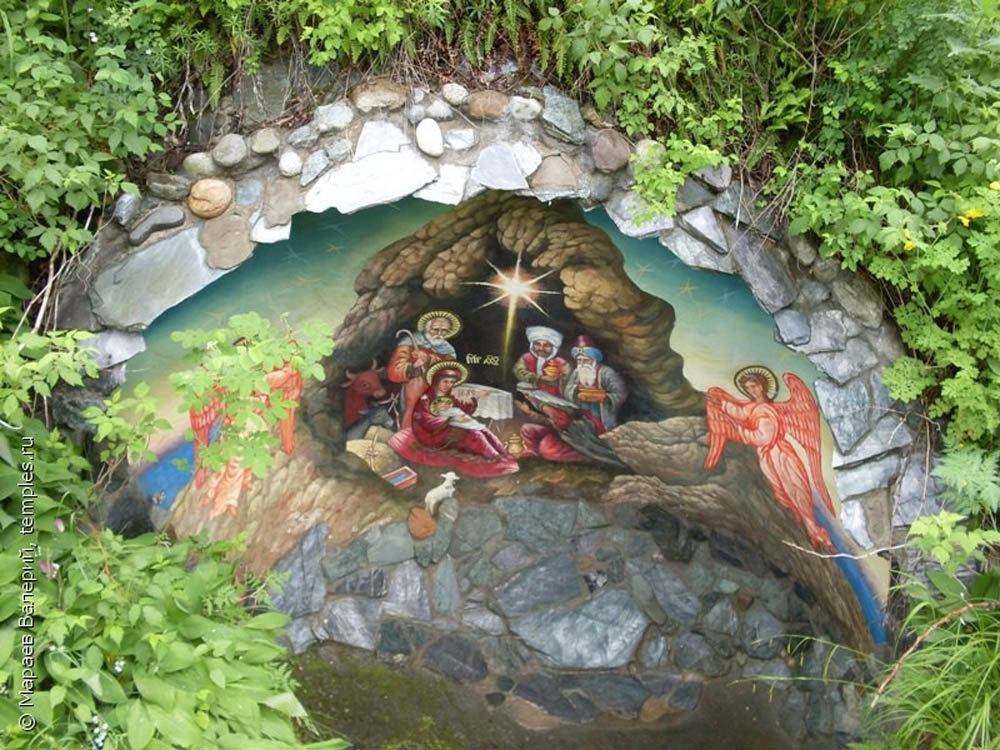
In the church there are both old and new icons. Miracles here have become almost common: the icon of the Mother of God, secretly preserved in the Soviet times and transferred to the temple, turned into a black board with a barely perceptible image, self-renewed without the touch of restorers when she was placed in the chapel. And continued to be renewed in the following years, all the brighter revealing the divine beautiful face. Another icon unexpectedly became wet. And after a small landslide, which changed part of the rock, the nun Felofeya suddenly saw in the stone ledge the face of the Theotokos with the baby in her arms; all that was left to do was to release the magical image from the stone. A marvelous sculpture, forming a single unit with an array of islands, is perfectly visible from the shore and shocks all the guests of Patmos. Young people are attracted to the icon painting of the martyr warrior Eugene - a young man who died in Chechnya. All the photo albums dedicated to the Altai Mountains bypassed the icon-fresco in the hollow of a stone boulder at the entrance to the church.
The history of the church is inextricably linked with the name of the Moscow photographer Pavlov V.N. Visiting Chemal, Victor Nikolayevich became interested in the destroyed island church and became fired with the idea of its restoration. He moved to Altai, selling a Moscow apartment and photo studio, and in a few years literally recreated a spiritual relic. And after the completion of construction and consecration, he transferred the church as a gift to the Orthodox Barnaul and Altai Diocese. Then Pavlov worked for many years as an economist at the monastery, taught at a Sunday school, and in 2011 was buried here, in Chemal, near the chapel of St. Macarius.
The Church of St. John the Theologian is open for free visits at any time of the year. The deep, pure, truly heavenly aura of this place gently touches the heart, leaving an indelible mark in it.
Along the mountain path
From the St. John the Theologian monastery begins the famous "goat path" to the former Chemal HPP - about 700 meters of a rocky path trodden by thousands of feet, laid along a abrupt bank high above Katun. At one time, only grazing goats made their way here, and now there are many tourists, admiring the stunning scenery. The path is fortified on the side of the cliff, stairs are arranged on especially abrupt sections; it's easy for children and old people to walk along the path, of course, with certain caution.
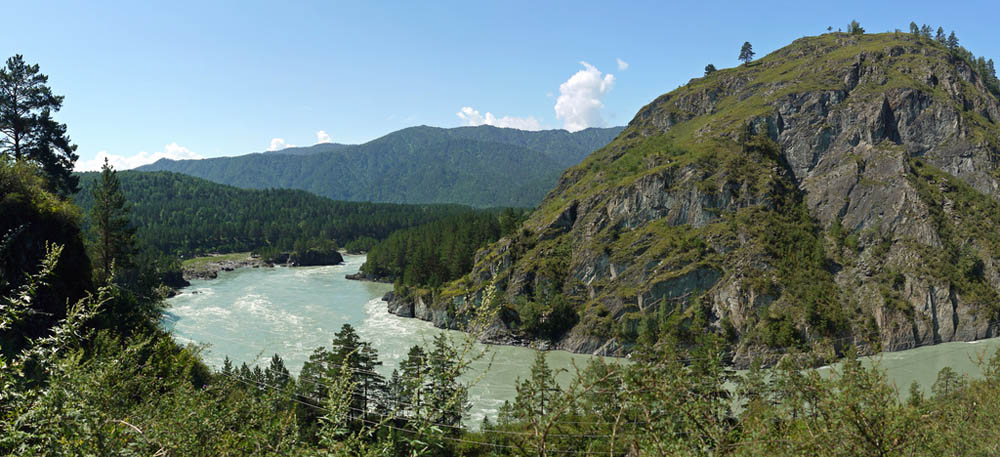
At the very beginning of the path there is a magnificent view of the Katun canyon, called the Gates of Sartakpai, the most famous hero of the Altai folklore. According to one of the legends, Sartakpai pierced the mountains with his arrow and liberated the path to Katun, who fled to her beloved; on the other, he pushed aside the stone mass when he freed the waters of the Altai, locked in mountain ridges; on the third, tried to build a bridge across the wayward river in its narrowest place, but failed. When the flood subsides, beneath the cliff you can see the water-clad rocks with deepening of bizarre shape; the old Altaians claim that these are footprints from the feet of Sartakpai, and chaotically scattered stones in the channel - the remains of a bridge destroyed by the raging water.
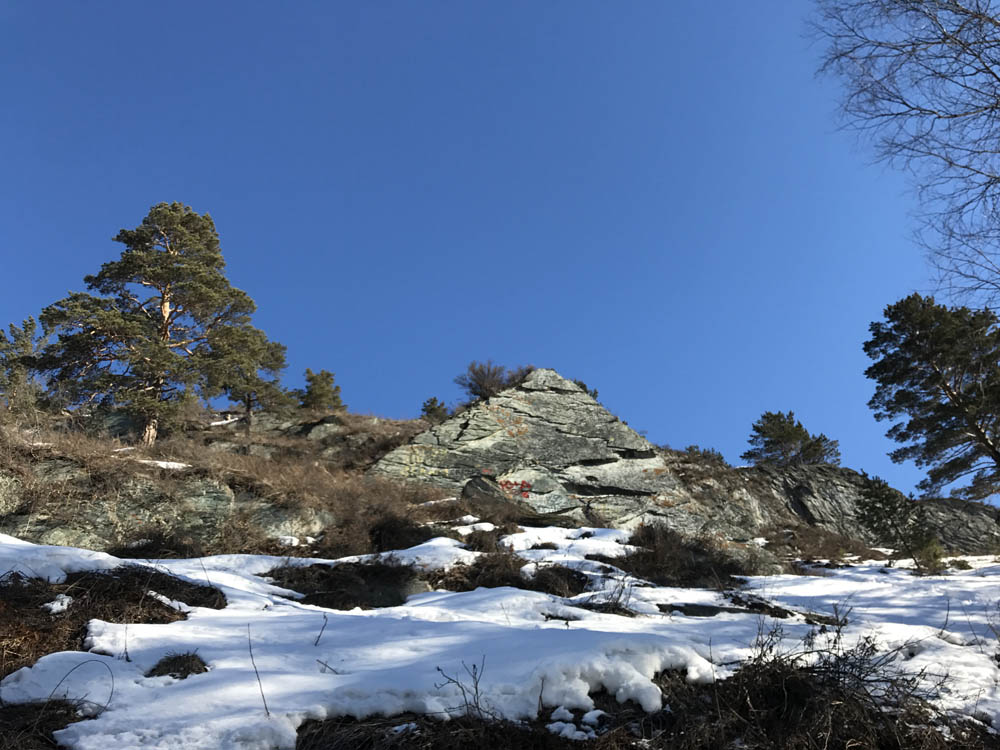
Near the Gates of Sartakpai there is a mountain of almost regular pyramidal shape. This is the Pyramid of Sartakpai; the mountain has a special energy and spreads it around itself for a long distance. Tradition says that it is under the pyramid mountain that the ashes of the legendary hero rest. The cozy secluded mini-coves on the banks of the Katun opposite the Gates and Pyramids are ideal places for meditation.
Almost throughout the "goat path", there are clearly felt energetic emanations: the path passes along the slope of the Mountain Beshpek, which has long been known as a place of power - the ancient sanctuaries and religious objects discovered here say this. Surprisingly, there are very few people at the top, located practically in the center of a large village, through which a huge tourist flow passes! Probably not everyone can be admitted to Beshpek, a sacred place of worship to higher forces.
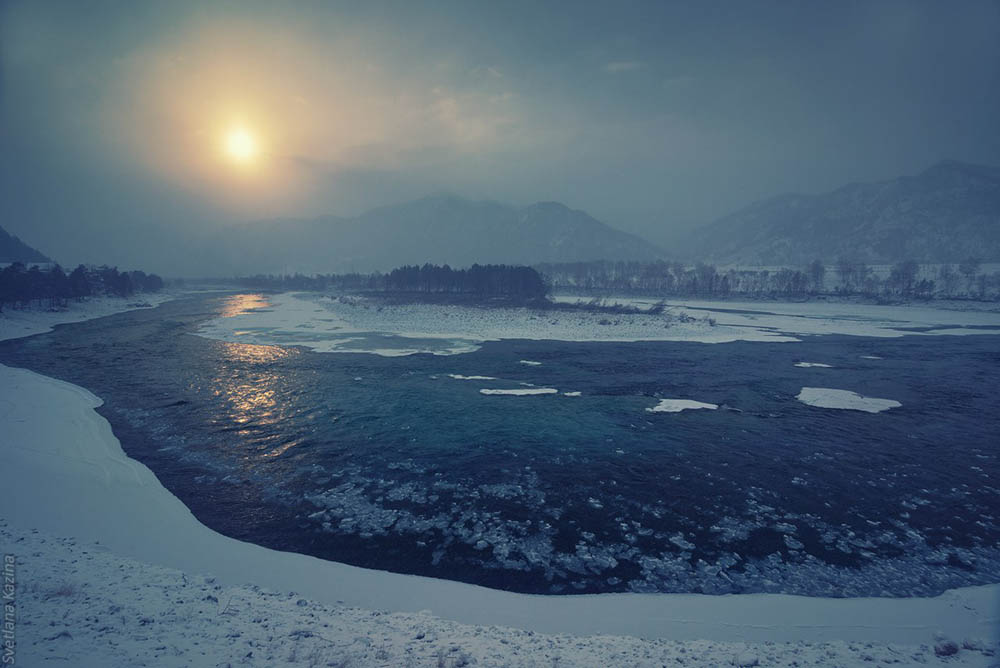
Another breathtaking view from the path is to the confluence in Katun of its inflow, the Chemal River. Transparent, from the height seeming black waters of Chemal meet with light-malachite Katun current and long stretch a well-marked strip.
Living and dead water
…With a stone stream, the path descends into the valley of the Chemal River, to the territory of the Chemals hydroelectric station. The hydroelectric station is a curious historical object, the first hydroelectric station in Altai and Siberia, built in 1931-35. Initially, the station was two horizontal turbines with a belt transmission to generators with a power of 235 and 225 kW, which gave 750 turnovers per minute each. For that time it was amazing power!
But here is the problem: human technogenic intervention clearly went against the natural harmony of these places. It is unlikely that there will be another hydroelectric station in Russia with an equally dramatic fate; for the time of its existence, the dam was nearly destroyed four times (!) by catastrophic floods. The first time this happened in 1934, even during construction, and only with heroic efforts the hydroelectric station was saved. In 1959, the spring flood washed away almost the entire left bank; in 1969, the water completely flooded the engine room and turbines. In 2011, as a result of the accident, the engine room was again out of order, after which the station was conserved, the reservoir was lowered, and Chemal HPP finally turned into a tourist zone, a mix of a technical and historical monument and an amusement park. The final chord was a flood in 2014, when the raging Chemal River washed off the bridge and brought it to the dam. The water that year rose to an incredible height, almost overlapping the windows of the station building. Now the dam works in the regime of a free throw, allowing without any disturbance to admire never a boring spectacle: white water streams of falling water.
Everything is transitory, nature is eternal. The energy of the valley remained the same, strong and bright. During the flood of 1969, on the left bank of Chemal, where a pretty pendant bridge is now spread, two sources with "living" and "dead" water were located: one, rich in silver, flows transparent streams of black stones, another, saturated with iron, leaves around itself red coating. As in a fairy tale - to drink living and dead water in order to find eternal youth…
Next to Chemal there is a mountain Camel with two peaks - another powerful Place of Force. At 15 km upstream of the Katun, in the narrow canyon lies the sanctuary Chech-Kysh, where rituals of the shamans' generation were held. A few dozen kilometers from Chemal in the Iolgo mountain ridge lie the sacral Karakol lakes; the sacred lake Manas is hidden. And all the invisible threads, all the delicate currents, all the streams of the Force are pulled together and intersect over the Chemal valley.
The Blue lakes of Katun
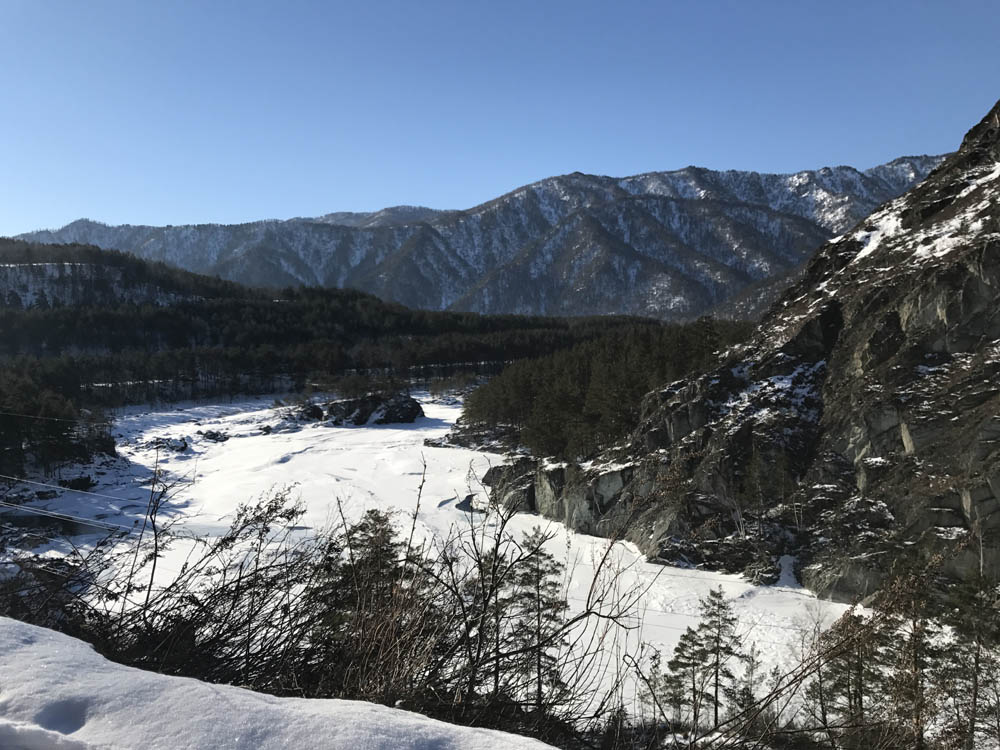
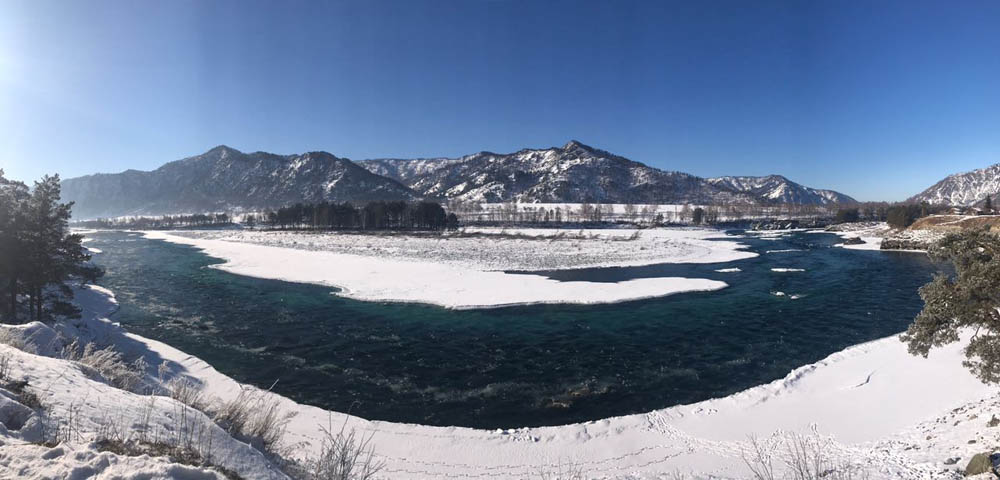
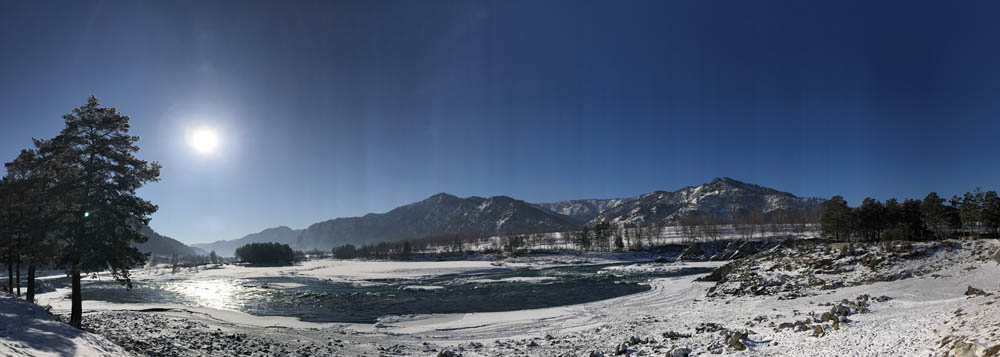
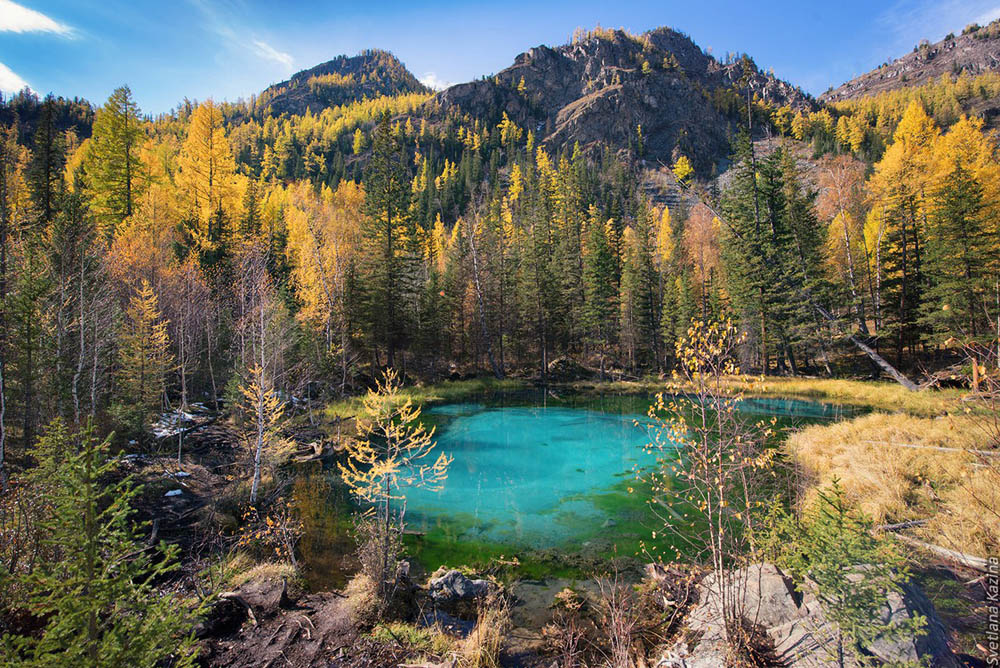
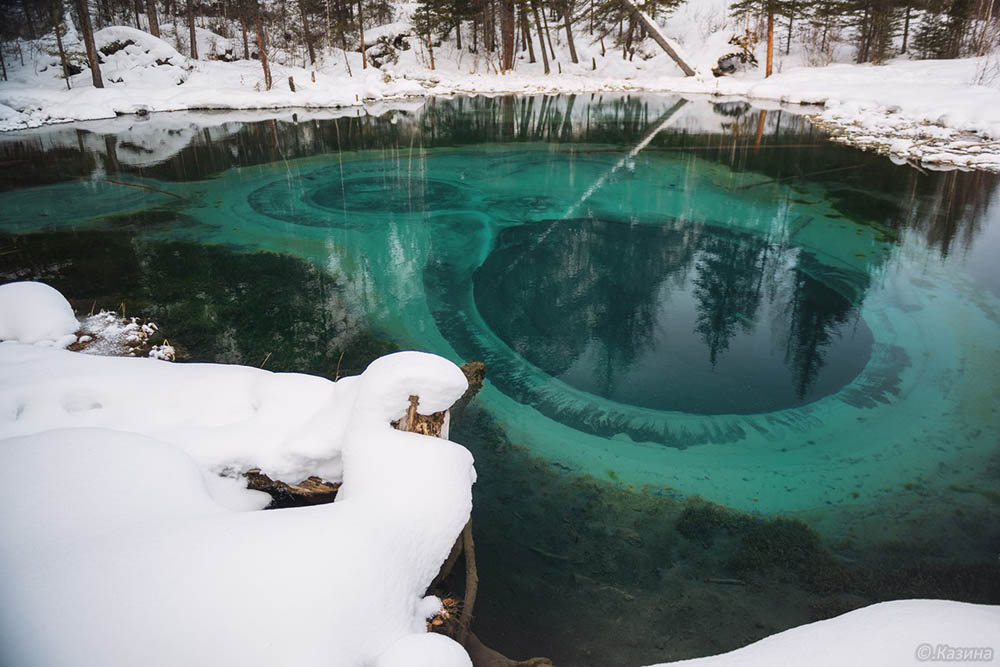
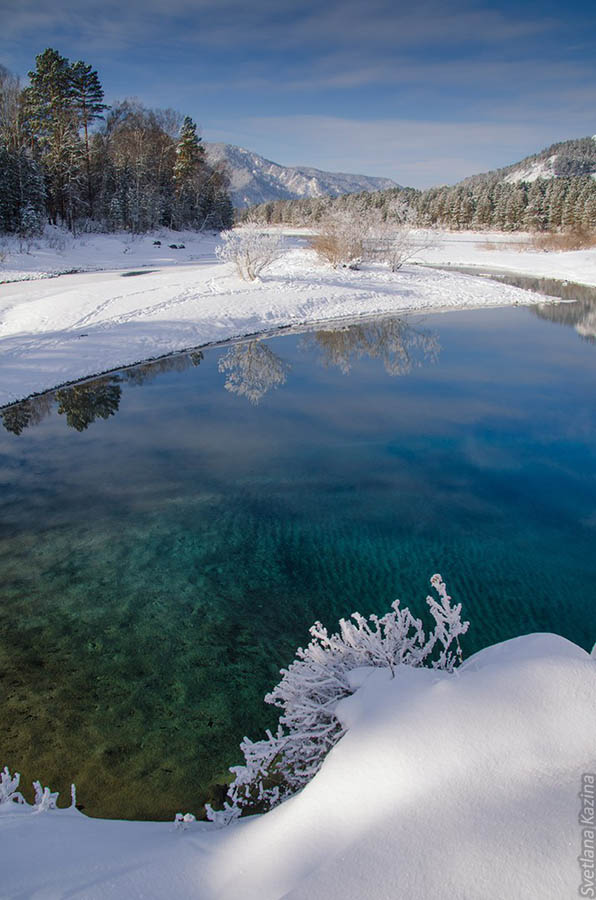
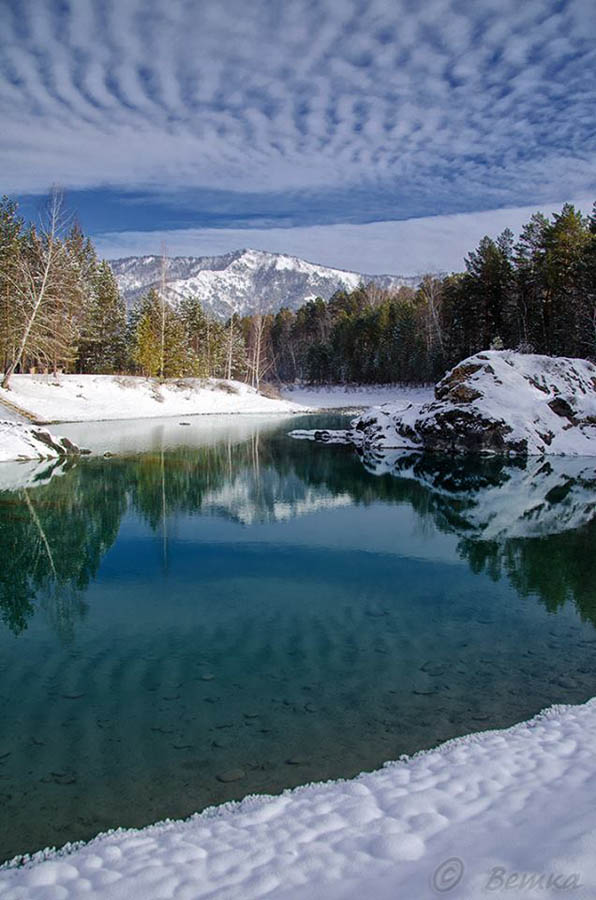
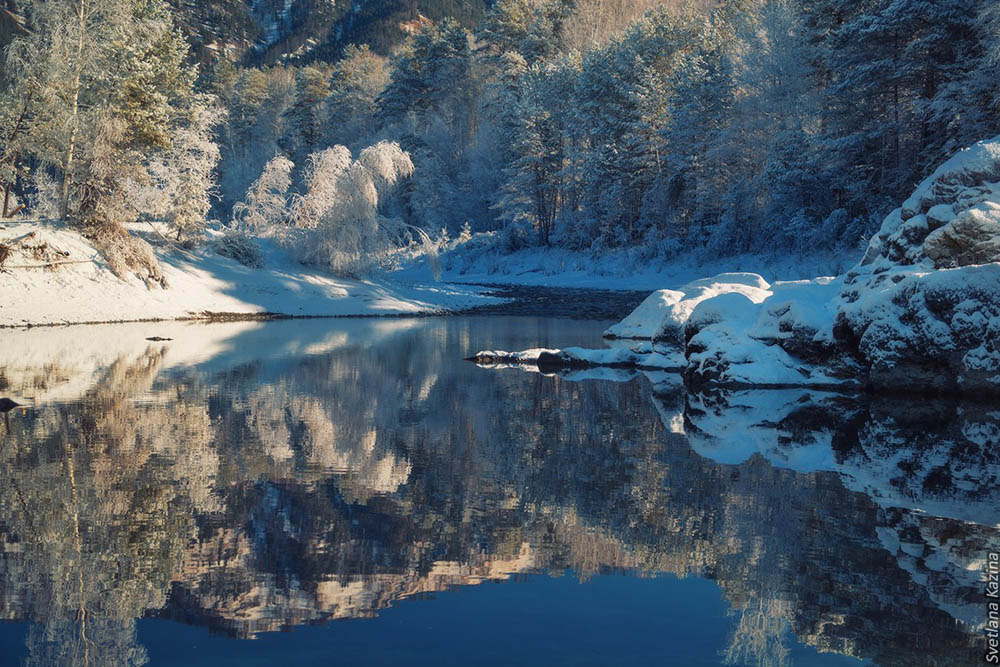
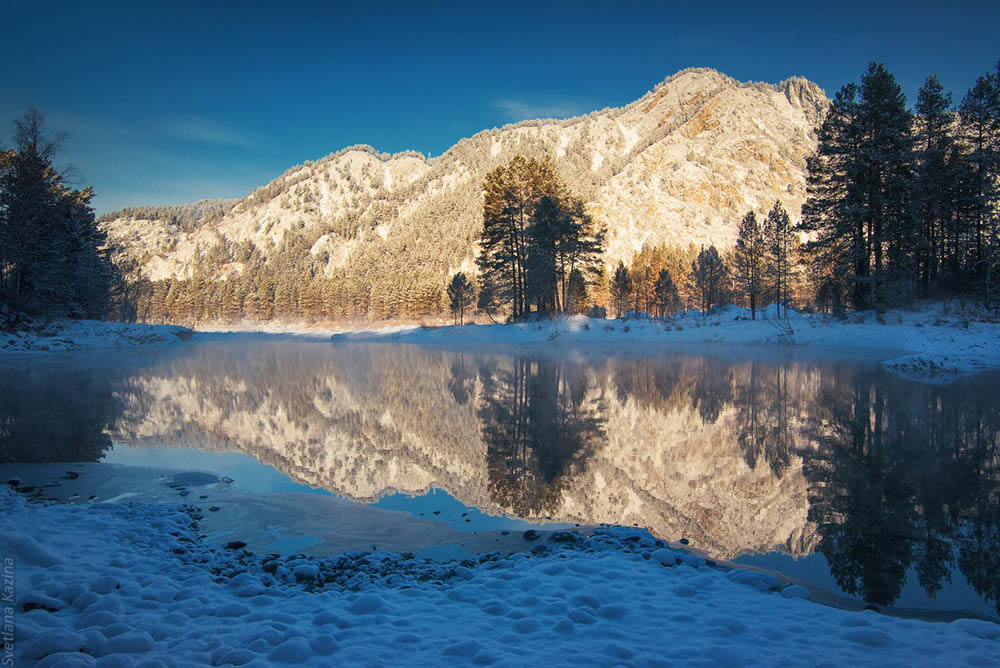
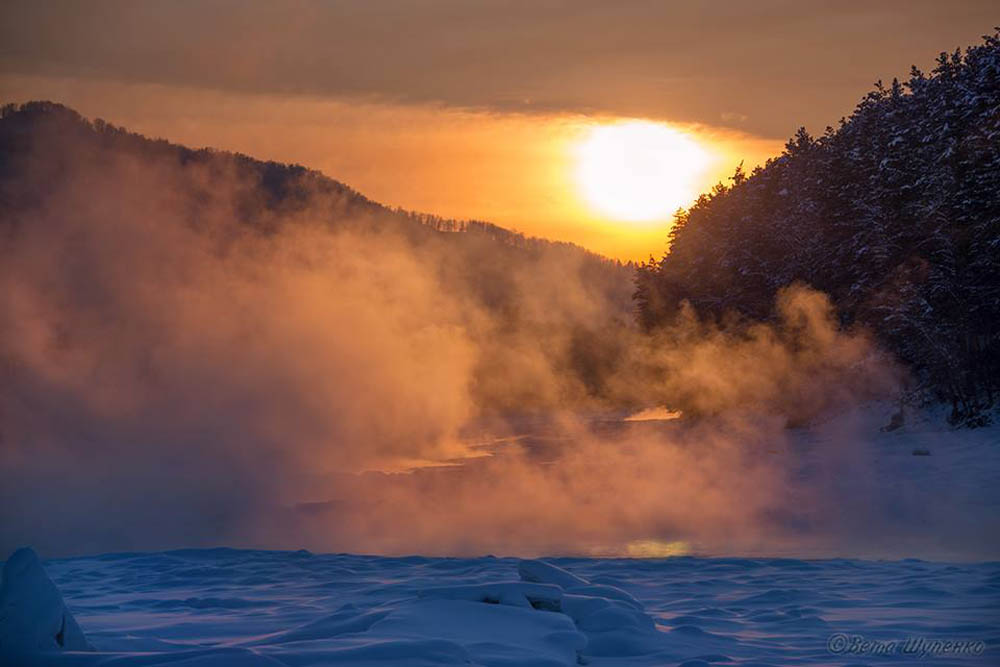
20 km from Chemal, near the village of Askat, lie the Blue Lakes in the channel of the Katun River - a real miracle of nature and a place of power. They exist only from autumn to mid-spring, when the water in Katun is low and a small sleeve branching off from the main channel, dries up. They got their name for the color of the clearest water: geyser, it's malachite, it's blue, it's emerald, it's also a secret, small, cozy, taiga, with a daily changing pattern of the bottom. Non-freezing, lively, sometimes boiling, sometimes calm-breathing. Yes, draws a lake, draws a new pattern every day at the bottom. The lake speaks and answers. Each takes in its own way. It's difficult to get away from it, so it would start talking in such a way that you could not stop listening. Draws a variety…
A unique contrast with a fiery autumn leaves or snow-covered pine trees along the banks. A magical picture!
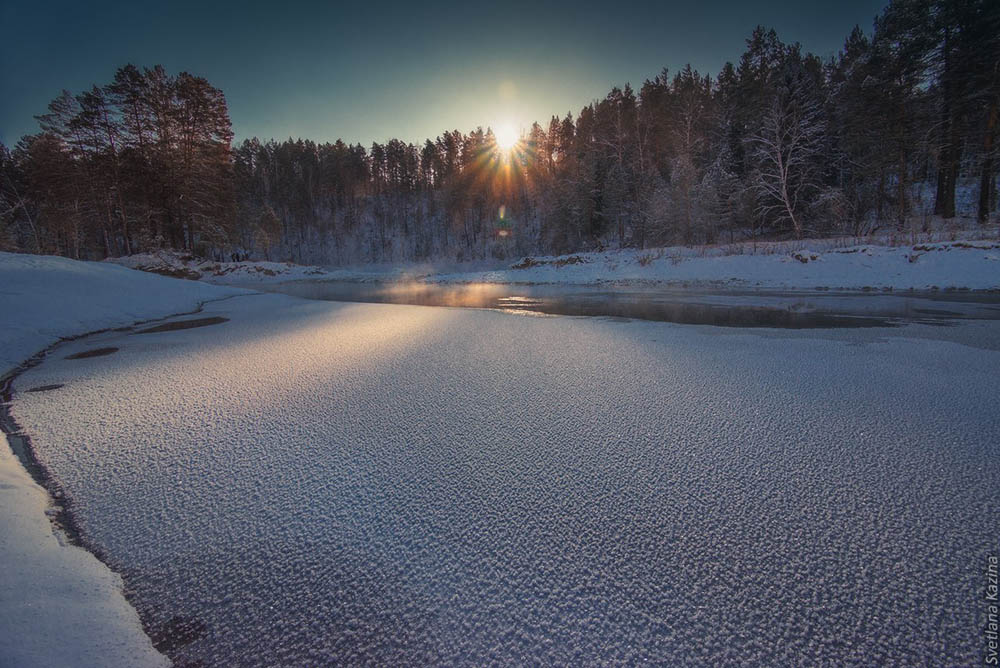
At the bottom of water 4-8 m deep, numerous strong springs are striking; no, not warm, cold! But they give so much water that it just does not have time to freeze, and even in December-January the temperature is maintained at + 3-5 ° C: it is quite possible not only to wash, but also to bathe with a certain preparation. Incredible sensation: pure soft water washes away all negativity, returns cheerfulness and composure.
It's not the first century that hundreds of people have made a pilgrimage to blue lakes with ice-free water. There is a fairly well-founded version that under the lakes and the Askat Valley there is an underground artesian reservoir that receives cosmic radiation and transfers it to the surface, accumulating it into pure creative energy. Indeed, the village Askat is simply the focus of talented individuals: artists, sculptors, potters, masters for working with stone, leather, beads. Extrasensory abilities are developed for many villagers, both aboriginals and settlers. And it is not without a reason that the Buddhist center of the Diamond Way of the Karma Kagyu tradition, intended for spiritual practices, operates here.
Traveling to Chemal and to the Blue Lakes is a touch to a very special sacred atmosphere that exists only in the Altai Mountains.